
There is something quietly special about finding a letter on the doormat. Not a bill, not a leaflet, but something that has been made with care and sent with intention.
In a time where most stories live on screens and disappear with a swipe, The Secret Post offers a slower, more thoughtful way to read.
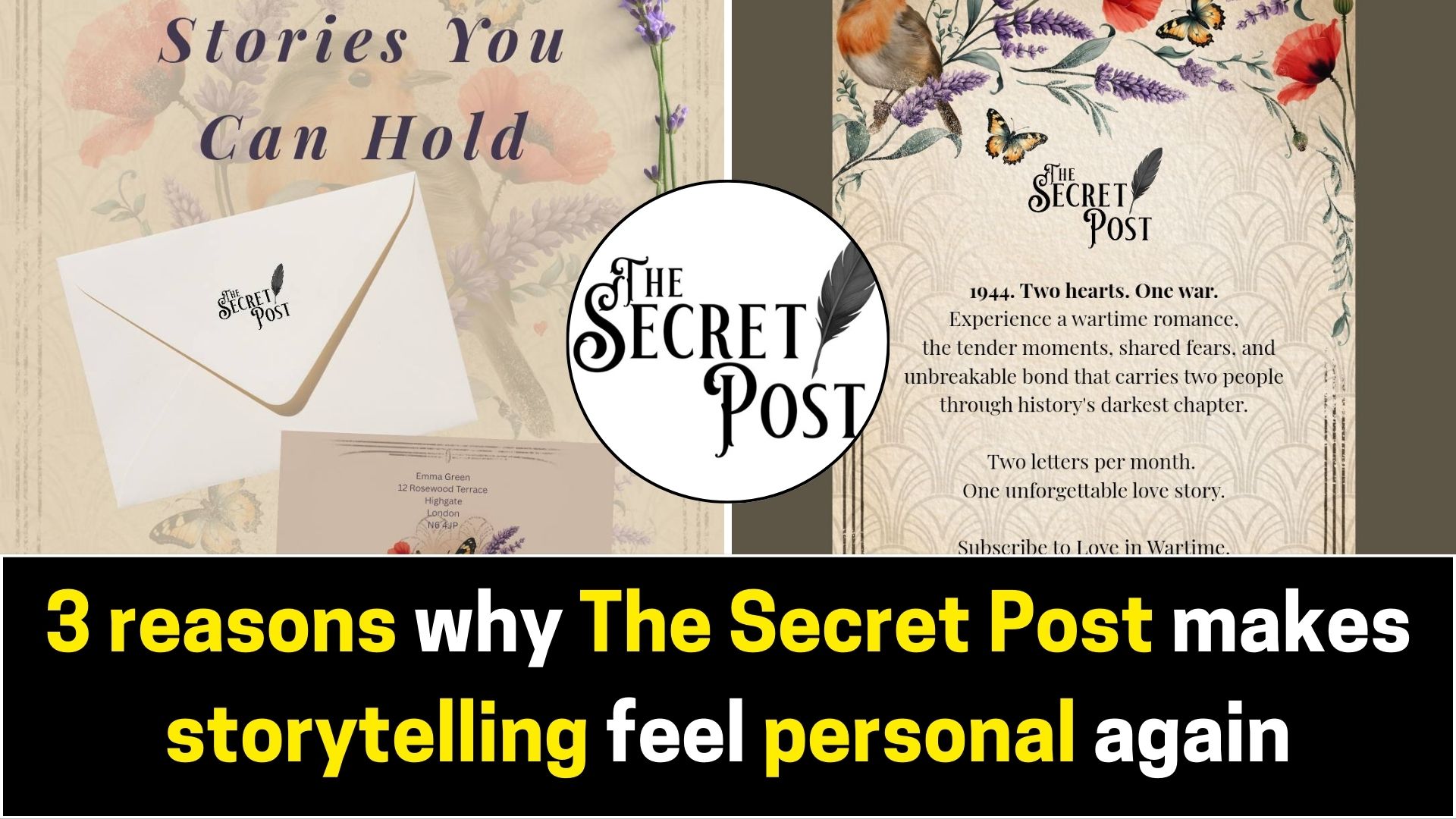
It brings fiction back into the physical world through a series of beautifully designed letters that arrive twice a month, each one moving a story forward.
This is not just about reading. It is about waiting, opening, holding, and sitting down with a cup of tea while a new piece of a character’s life unfolds.
Created by a mother and daughter team who clearly love both storytelling and traditional correspondence, the experience feels personal from the very first envelope.
Here are three simple reasons why this kind of storytelling is worth making space for.
It brings back the feeling of real anticipation
Most stories today arrive all at once. A whole series is available in a single click. A novel can be finished in a weekend. That convenience is useful, but it removes the sense of looking forward to what comes next. The Secret Post changes the pace completely.
View this post on Instagram
Two letters arrive each month, posted on the second and fourth Friday. That gap between deliveries matters. It gives the story time to sit in the mind. It allows the characters to feel more real because their lives do not rush past in a blur. There is space to think about what they wrote, to notice small details, and to feel the quiet excitement of waiting for the next chapter.
And the format helps. These are not plain sheets of paper. Each letter is designed to match its time period and setting. A wartime message feels different from a Victorian note. A telegram or newspaper clipping adds context in a way that a standard page never could. The extras are not gimmicks. They make the world of the story feel solid and believable.
The WW2 romance, Love in Wartime, shows this perfectly. The relationship grows across distance and uncertainty, one envelope at a time. The reader does not rush through it. It unfolds at the same pace the characters would have lived it. That small delay between letters creates a stronger emotional pull than a single, uninterrupted read.
There is also something quietly enjoyable about seeing an envelope with your name on it that is not demanding anything. It is just there to be opened when the moment feels right.
It turns reading into a calm, screen free ritual
Reading on a phone or tablet often competes with notifications, messages, and the habit of checking something else every few minutes. Even a good story can lose its atmosphere when it is surrounded by digital noise. The Secret Post offers a simple alternative. It asks the reader to sit down, open a letter, and give it full attention for a short while.
View this post on Instagram
This is where the physical details matter. The paper, the typography, the period styling, and the small items tucked inside the envelope all slow the experience down. It becomes a small routine. Kettle on. A comfortable chair. The letter opened carefully rather than skimmed.
Because the content arrives in pieces, it never feels overwhelming. Each delivery is manageable. It fits easily into a quiet evening or a slow Sunday morning. That makes it more likely to become a regular habit rather than something saved for later and forgotten.
The Victorian supernatural mystery, The Black Rose, benefits from this pace. The urgent correspondence between Colonel Ashworth and Detective S.H. gains tension when read in this way. The sense that something is approaching London, something ancient and dangerous, grows stronger because the reader lives with the story between letters.
There is also a subtle shift in how the story is received. A screen encourages quick reading. A letter encourages a slower one. Words are noticed. Handwriting styles are studied. A map or postcard is turned over in the hand. The whole thing feels closer to real life than to fiction.
It makes a story feel personal again
Most modern storytelling is designed for large audiences. It is shared, streamed, and discussed in public spaces. That can be enjoyable, but it rarely feels private. A letter, by its nature, is different. It feels as though it was sent to one person.
This is the strongest part of The Secret Post. Every delivery arrives in a way that suggests care. The research behind the historical details, the design choices, and the pacing of the narrative all show that attention has been given to the experience, not just the plot.
View this post on Instagram
Because the stories are told through correspondence, the reader becomes almost a silent participant. Reading someone else’s letters has always carried a certain intimacy. Thoughts are shared more openly in that format. Emotions are clearer. The gaps between replies say as much as the words themselves.
There is also a sense of connection to the creators. Knowing that the project is run by a small family team adds warmth to the experience. It does not feel like a mass produced product. It feels like something prepared and sent with genuine enthusiasm for the idea.
Over time, the envelopes themselves become keepsakes. They can be tied together, stored, and returned to. That is very different from a digital story that disappears into a library of files once it is finished. These letters take up real space. They can be re read in a different order, shared with someone else, or simply kept as a reminder of the experience.
And sometimes they do more than tell a story. They encourage people to write their own letters again. Not for a project or a subscription, but for a friend, a partner, or a family member. That quiet influence is part of their charm.
In the end, the appeal of The Secret Post is not complicated. It slows things down. It makes reading feel like an event rather than a background activity. It gives fiction a physical form that can be held, opened, and returned to.
View this post on Instagram
For those who enjoy historical settings, gentle romance, mystery, and the feeling of stepping into another time, it offers something that a standard book or an online series cannot quite match. The story does not just live in the mind. It arrives through the letterbox, sits on the table, and waits to be opened.
That small change in format brings back something many people did not realise they missed, the simple pleasure of a story that takes its time.